
Encouraging self-reliance in people with (early) dementia
Living independently in a familiar home environment for as long as possible is a key mission for TSN Zorg. And when this is no longer possible: providing a warm alternative home in a care facility where self-reliance remains an important factor.
To promote the self-reliance of their clients, TSN Zorg deploys enthusiastic care staff as self-reliance ambassadors. These ambassadors assist colleagues and clients in using care technology and aids that encourage self-reliance. They do this both in district teams and in care facilities.
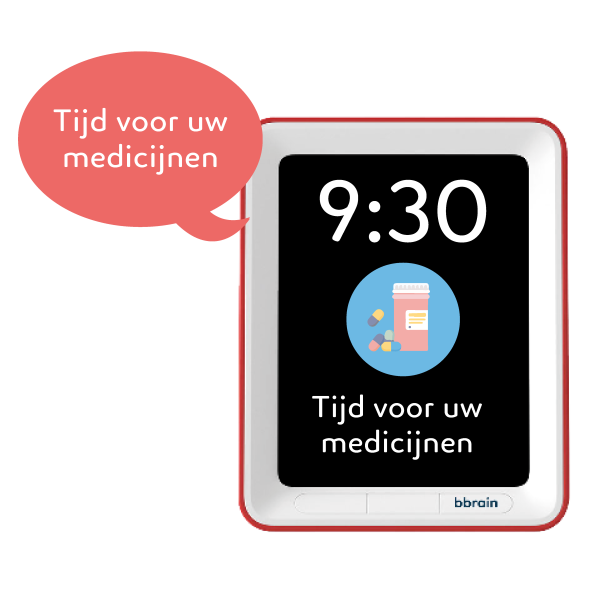
Orientation in time and daily planning and structure are essential for maintaining self-reliance. To support people with memory issues and (early) dementia, tools such as the BBrain Reminder Day Clock and the BBrain Family are used. Through the ambassadors, the clocks can be temporarily borrowed. This allows clients to experience the product and enables staff and family to monitor if the desired results are achieved.
“Previously, we took over many actions for clients, which led to a faster decline. Now that we are increasingly focusing on self-reliance, we see the opposite happening. If someone continues to perform daily tasks as much as possible on their own, clients remain longer vital, allowing them to stay in their familiar environment.” - Janine
Daily planning and structure
“One of our clients used to ask multiple times a day what day it was and what time it was. Because he lost the overview, he didn’t always take his medication at the right time. Therefore, we set up a BBrain Reminder Day Clock for him last week. The BBrain clearly displays the day, time, and date. Additionally, it provides reminders for taking medication. He finds it very helpful; it gives him peace of mind,” says ambassador Marja.
In addition to reassuring clients with its comprehensive time display and medication reminders, the BBrain Reminder Day Clock is also used in the district teams to remind clients about ADL (activities of daily living) tasks. Examples include eating and drinking moments, personal care like showering, and even reminders to take a walk.

Video calling
Ambassador Rachel, a leading district nurse, explains: “With video care, sometimes the argument is: ‘Then I barely see you.’ But I always explain that there is also a lot of indirect time: traveling, opening and updating files. In the end, we are only inside for 5 minutes. Now you can see and speak with us for 10 minutes. So, there is actually more personal attention. Of course, video calls don't replace everything.”